
🏘️ Responsive vs Planned Maintenance: What Housing Associations Should Prioritise?
Finding the Right Balance to Reduce Costs & Improve Service
Housing associations are constantly balancing two types of maintenance:
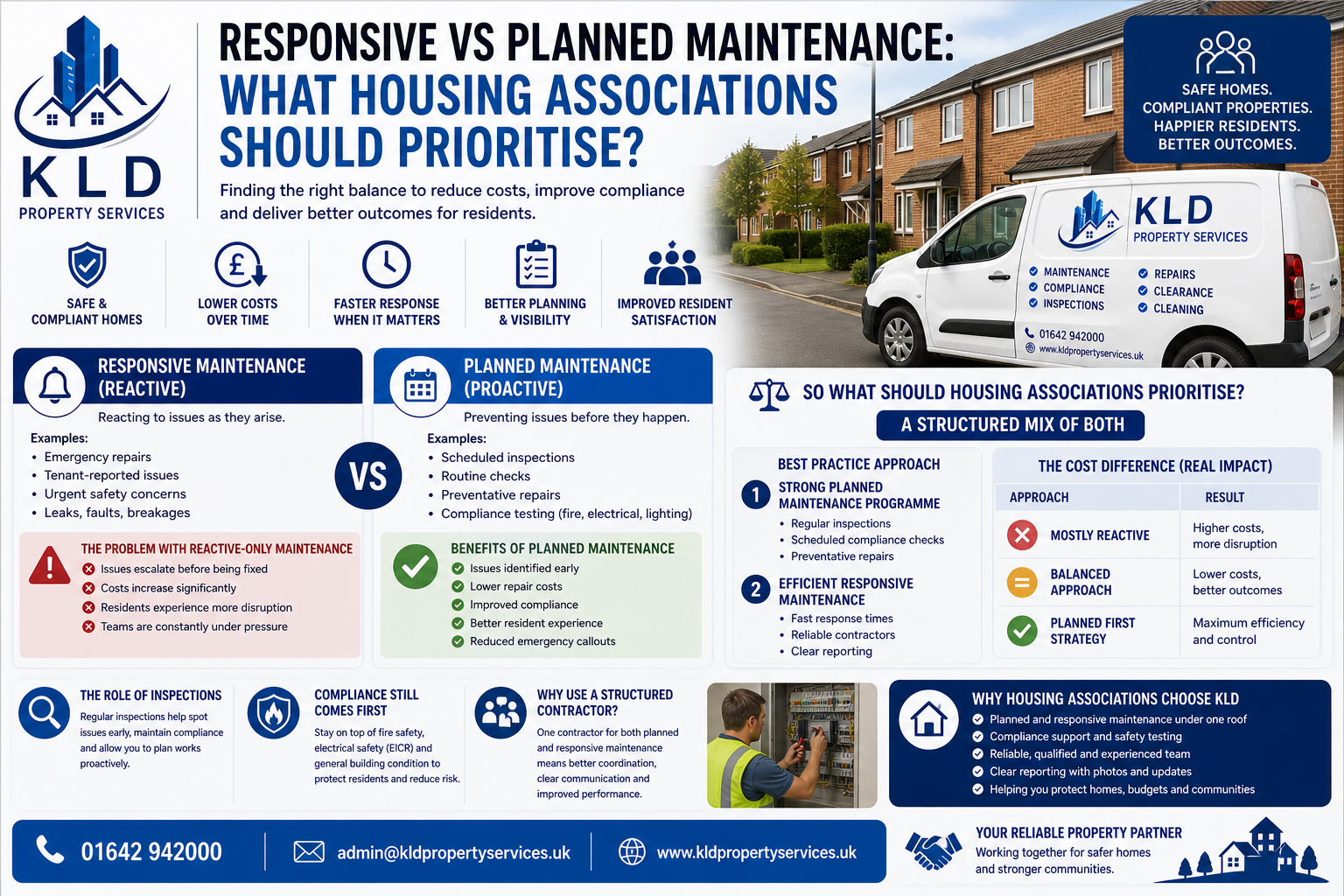
- Responsive maintenance – reacting to issues as they arise
- Planned maintenance – preventing issues before they happen
Both are essential—but relying too heavily on one can lead to:
- Increased costs
- Poor service levels
- Compliance risks
The key is getting the balance right.
🔧 What Is Responsive Maintenance?
Responsive maintenance is reactive work, such as:
- Emergency repairs
- Tenant-reported issues
- Urgent safety concerns
Examples:
- Leaks
- Broken doors or locks
- Electrical faults
- Heating failures
⚠️ The Problem With Reactive-Only Maintenance
If everything is handled reactively:
- Issues escalate before being fixed
- Costs increase significantly
- Residents experience more disruption
- Teams are constantly under pressure
👉 Reactive work is necessary—but shouldn’t be the only approach
📋 What Is Planned Maintenance?
Planned maintenance is proactive work, including:
- Scheduled inspections
- Routine checks
- Preventative repairs
- Compliance testing
Examples:
- Fire alarm testing
- Emergency lighting checks
- Property inspections
- Minor repairs before they worsen
✔ Benefits of Planned Maintenance
- Issues identified early
- Lower repair costs
- Improved compliance
- Better resident experience
- Reduced emergency callouts
👉 This is where real cost savings come from
⚖️ So What Should Housing Associations Prioritise?
The answer isn’t one or the other—it’s:
👉 A structured mix of both
⚡ Best Practice Approach
1. Strong Planned Maintenance Programme
- Regular inspections
- Scheduled compliance checks
- Preventative repairs
2. Efficient Responsive Maintenance
- Fast response times
- Reliable contractors
- Clear reporting
💰 The Cost Difference (Real Impact)
ApproachResultMostly ReactiveHigher costs, more disruptionBalanced ApproachLower costs, better outcomesPlanned First StrategyMaximum efficiency and control
🔍 The Role of Inspections
Regular inspections are the foundation of planned maintenance.
They help:
- Spot issues early
- Maintain compliance
- Plan works properly
👉 See:
https://www.kldpropertyservices.uk/blog/property-inspections-for-landlords/
🔥 Compliance Still Comes First
Planned maintenance also ensures compliance with:
- Fire safety requirements
👉 https://www.kldpropertyservices.uk/blog/fire-alarm-testing-requirements-blocks-uk/ - Electrical safety (EICR)
👉 https://www.kldpropertyservices.uk/blog/eicr-for-landlords/
Failing here leads to:
- Legal risk
- Safety issues
- Increased costs
🧠 Why Housing Associations Use a Structured Contractor
Managing multiple contractors often results in:
- Delays
- Missed tasks
- Poor communication
A structured contractor provides:
✔ Planned maintenance support
✔ Responsive maintenance capability
✔ Clear reporting
✔ One point of contact
🏢 Why Housing Associations Choose KLD Property Services
We support housing providers with both:
✔ Planned Maintenance
- Inspections
- Compliance checks
- Preventative works
✔ Responsive Maintenance
- Fast attendance
- Efficient repairs
- Reliable service
All under one contractor.
That means:
✔ Better coordination
✔ Reduced costs
✔ Improved service levels
✔ Full visibility across your portfolio
📞 Need Support With Planned & Responsive Maintenance?
We work with housing associations, managing agents and property professionals across the North East.
If you’re looking to improve efficiency and reduce costs—we can help.
👉 Send details or enquiry
📧 admin@kldpropertyservices.uk
📞 01642 942000